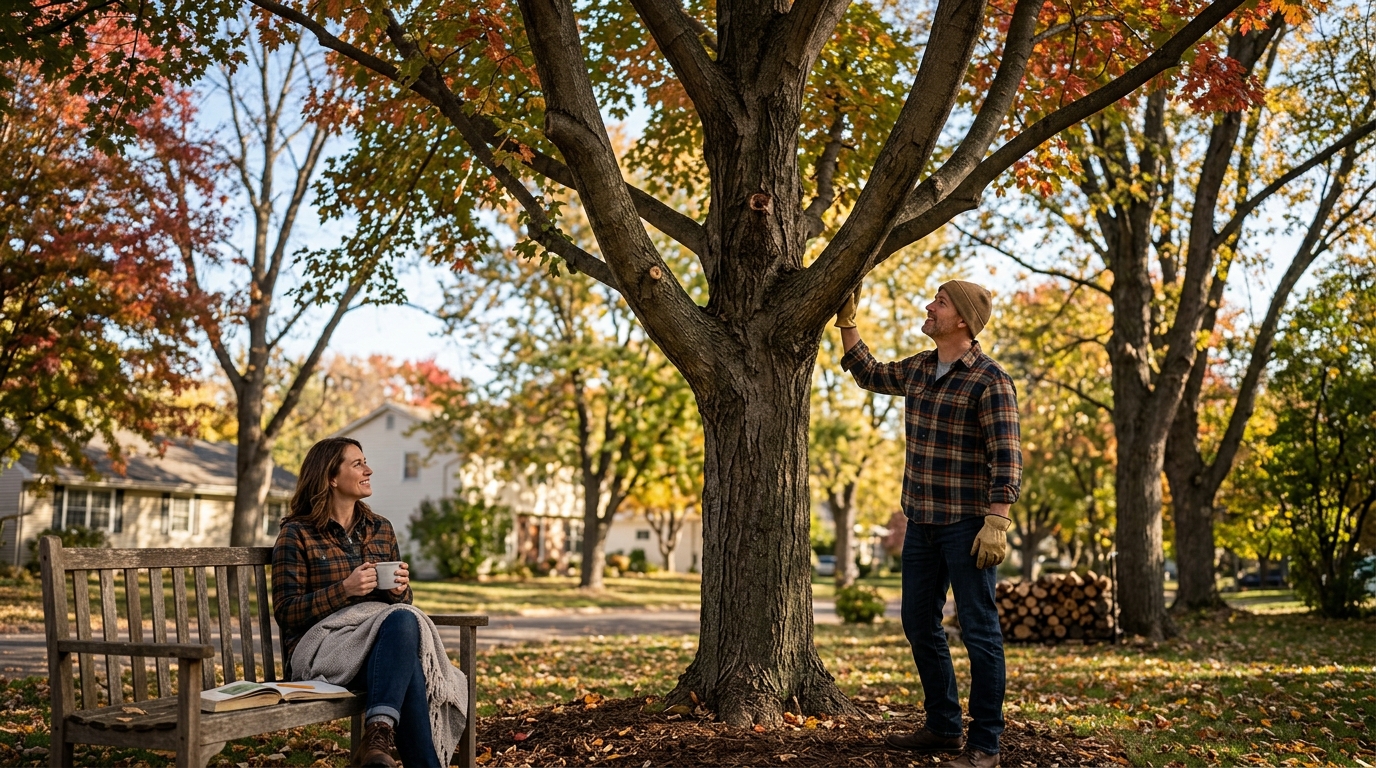
Healthy trees are the backbone of any thriving property in the Upper Midwest, yet they face unique environmental pressures throughout the year. According to recent arboricultural data, over 60% of urban tree mortality in the Midwest is linked to preventable stress factors like soil compaction and improper pruning. This statistic highlights why proactive care is not just an aesthetic choice but a critical investment in property safety and value. At Midwest Tree Removal, we see firsthand how neglecting early warning signs can lead to catastrophic failures during severe weather events. This guide provides the definitive framework for keeping your landscape vibrant, safe, and structurally sound.
Understanding the Foundations of Tree Health
Before diving into specific tasks, it is essential to define what constitutes a healthy tree. Tree health is the physiological state of a tree that allows it to grow, resist pests, and survive environmental stressors. In St. Paul, Minnesota, this definition is complicated by our harsh winters and humid summers. Trees here must endure freezing temperatures that can cause frost cracks, followed by intense heat that stresses root systems.
Many homeowners mistake a lack of leaves for simple dormancy, when it may actually be a sign of root rot or girdling roots. A healthy tree in our region should exhibit vigorous bud break in the spring, full canopy density in summer, and consistent leaf drop in autumn. If you notice premature leaf drop or sparse foliage, the tree is signaling distress. This is where expert insight becomes invaluable for accurate diagnosis.
Seasonal Care Calendar for St. Paul
Maintaining tree health requires a rhythmic approach that aligns with the four distinct seasons of Minnesota. Each season presents specific challenges and opportunities for intervention.
Spring: Assessment and Early Intervention
As the snow melts, inspect your trees for winter damage. Look for broken branches or split bark caused by ice storms. This is the ideal time to schedule professional tree trimming if structural issues are identified. Early spring is also the window for fertilization, provided the soil is not saturated. Avoid working on wet soil to prevent compaction, which suffocates roots.
Summer: Hydration and Pest Monitoring
Summer in St. Paul can bring periods of drought. During these times, deep watering is critical. However, overwatering is equally dangerous. Monitor your trees for signs of insect activity, such as sawdust-like frass or unusual holes in the bark. Early detection of borers or beetles can save a tree from total collapse. If you suspect an infestation, contact Midwest Tree Removal for a diagnostic assessment.
Autumn: Preparation for Winter
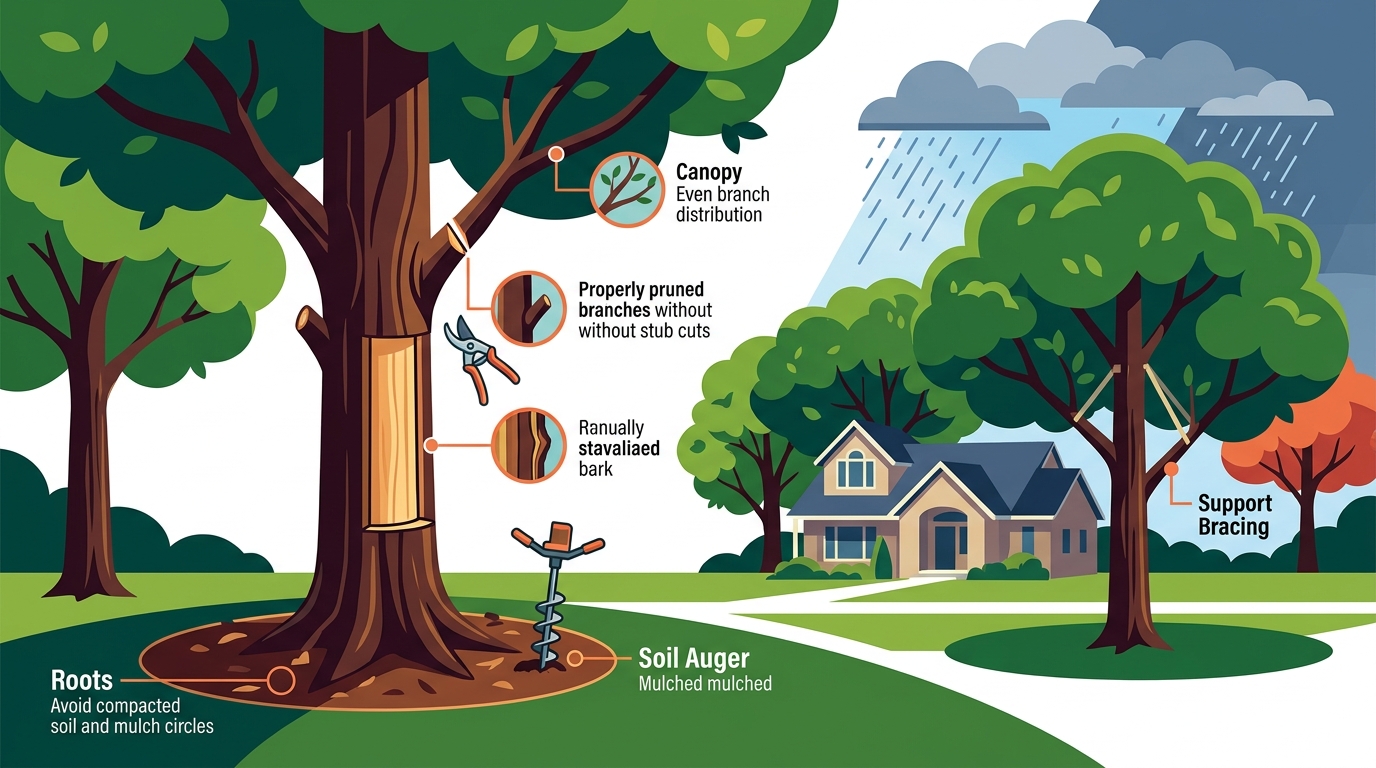
Fall is about preparation. Remove dead or diseased wood that could become projectiles during winter storms. This is also the time to mulch around the base of trees, keeping the mulch away from the trunk to prevent rot. Proper mulching insulates roots against the coming freeze.
Winter: Dormancy and Safety
While trees are dormant, winter is not a time for inaction regarding safety. Clear heavy snow from branches using a broom, not by shaking them, to prevent breakage. Monitor for wildlife damage, such as deer rubbing against bark, which can girdle young trees.
Watering Strategies and Soil Management
Water is the most critical nutrient for tree health, yet it is often the most misunderstood. Deep watering encourages roots to grow downward, creating a drought-resistant root system. Shallow watering, which is common with automatic sprinklers, encourages roots to stay near the surface where they are vulnerable to freezing and drying out.
In St. Paul, clay-heavy soils are prevalent. These soils drain poorly and can lead to root rot if overwatered. To combat this, use a slow-release watering method, such as a soaker hose or a bucket system, applied over several hours. This allows water to penetrate the dense clay without pooling on the surface.
Soil health is directly linked to tree vitality. Compacted soil, common in urban landscapes due to foot traffic and construction, restricts oxygen flow to roots. Aeration is a vital practice for maintaining soil structure. If you are planning landscaping projects, consider land clearing and grading services to ensure proper drainage and soil aeration before planting new trees.
Pruning Best Practices and Common Mistakes
Pruning is both an art and a science. When done correctly, it improves structure and health. When done incorrectly, it opens the tree to disease and decay. Proper pruning involves making cuts just outside the branch collar to allow the tree to compartmentalize the wound effectively.
The Three Cuts Method
For large branches, always use the three-cut method to prevent bark tearing. First, make an undercut about 12-18 inches from the trunk. Second, make a top cut further out on the branch to remove the weight. Third, make the final cut just outside the branch collar to remove the stub. This technique ensures the bark remains intact along the trunk.
Common Mistakes to Avoid
Topping is the most destructive pruning practice. It involves cutting off the main branches, leaving stubs that cannot heal properly. This leads to weak, fast-growing shoots that are prone to breaking. Another common mistake is flush cutting, where the branch is cut flush against the trunk, removing the protective branch collar. Avoid these errors by hiring certified arborists who understand tree biology.
Identifying Pests and Diseases
St. Paul’s climate supports a variety of tree pests and diseases. Early identification is key to management. Common threats include Emerald Ash Borer, Dutch Elm Disease, and Oak Wilt.
Emerald Ash Borer is an invasive beetle that kills ash trees by disrupting their ability to transport nutrients. Signs include D-shaped exit holes in the bark and S-shaped larval galleries. If you have ash trees, regular monitoring is essential. Dutch Elm Disease is a fungal infection spread by beetles that blocks the water-conducting tissues of elm trees. Symptoms include wilting leaves that turn brown and curl, often starting on one branch.
Prevention is the best strategy. Ensure your trees are not stressed, as stressed trees are more susceptible to attack. Avoid moving firewood from infected areas, as this is a primary vector for spreading pests. If you notice symptoms, do not attempt to treat it yourself. Contact emergency tree service professionals for an accurate diagnosis and management plan.
When to Call a Professional Arborist
While DIY care is beneficial for minor issues, certain situations require professional intervention. Attempting to handle large trees or hazardous conditions without proper training can lead to severe injury or property damage.
Signs You Need Professional Help
- Large Branches: Any branch larger than your wrist requires professional tools and techniques to remove safely.
- Proximity to Power Lines: Trees near power lines pose a significant electrocution risk. Only utility-approved contractors should work in these zones.
- Structural Defects: Cracks, cavities, or leaning trunks indicate structural weakness that needs expert assessment.
- Disease Diagnosis: Accurate diagnosis of tree diseases often requires laboratory testing and specialized knowledge.
At Midwest Tree Removal, we provide comprehensive diagnostics and treatment plans. Our team is equipped to handle everything from routine maintenance to complex commercial tree trimming and removal projects. We prioritize safety and tree preservation in every job we undertake.
Key Takeaways
- Deep Watering: Encourage deep root growth by watering slowly and deeply, rather than frequently and shallowly.
- Proper Mulching: Apply mulch in a donut shape, keeping it away from the trunk to prevent rot and pest entry.
- Avoid Topping: Never top your trees. It causes long-term health decline and structural weakness.
- Monitor for Pests: Regularly inspect trees for signs of Emerald Ash Borer and other local pests.
- Seasonal Timing: Prune most trees in late winter or early spring while dormant to minimize stress and disease risk.
- Soil Health: Aerate compacted soils to ensure roots receive adequate oxygen and water.
- Professional Care: Hire certified arborists for large branches, power line proximity, and disease diagnosis.
Frequently Asked Questions
How often should I water my trees in St. Paul?
During the growing season, water deeply once a week if rainfall is less than one inch. In extreme heat or drought, increase frequency to twice a week, ensuring the water penetrates the root zone.
What is the best time of year to prune trees?
The best time is late winter to early spring, while the tree is dormant. This minimizes stress and reduces the risk of disease transmission. Some flowering trees should be pruned immediately after blooming.
How can I tell if my tree has a disease?
Look for wilting leaves, unusual discoloration, fungal growth on the trunk, or dieback of branches. If you suspect disease, contact a certified arborist for a professional diagnosis.
Is it safe to prune trees near power lines?
No, it is extremely dangerous. Always contact your utility company or a professional tree service for work near power lines to avoid electrocution and ensure compliance with safety regulations.
What is Emerald Ash Borer and how do I protect my ash trees?
Emerald Ash Borer is an invasive beetle that kills ash trees. Protection involves regular monitoring and, in some cases, preventive insecticide treatments applied by professionals.
Why is mulch important for tree health?
Mulch helps retain soil moisture, regulates soil temperature, and suppresses weeds. It also improves soil structure as it decomposes, providing organic matter to the tree.
When should I consider removing a tree?
Consider removal if the tree is dead, diseased beyond repair, or poses a hazard to structures or power lines. A professional assessment can help determine if treatment or removal is the best option.
Contact Midwest Tree Removal
Maintaining the health of your trees is a continuous process that requires knowledge, timing, and care. Whether you need routine pruning, emergency storm cleanup, or a comprehensive health assessment, Midwest Tree Removal is your trusted partner in St. Paul, MN. Our team of certified arborists is dedicated to preserving the beauty and safety of your landscape. Contact us today to schedule your consultation and ensure your trees thrive for years to come.